Since at least the 15th century, there have been laws in place deciding who could vote in England’s, and later Britain’s, parliamentary elections. The right to vote is known as the franchise or suffrage.
Those with the right to vote elect MPs who represent their constituency. There are two main types of constituency: county and borough.
County Constituency
A county constituency is a geographical area that is primarily rural or semi-rural.
Borough Constituency
A borough constituency is more urban and is usually an area that sits within a county.
These laws often controlled or restricted who would vote based on factors such as class, gender, location, age and religion, and these rules were often complicated, not always followed, and would be subject to major changes over the centuries.

Who could vote in each time period:
Medieval Period
Elections are one of the defining features of Parliaments. Yet they arose as a solution to a practical problem: the crown needed to gain consent from the people before raising taxes. But who would represent the people, and how should they be chosen?
For the Upper House (House of Lords) it was easy, the Monarch could simply summon their leading noblemen and clergy. But this system could not be used to gain consent from the wider population of counties and towns; the crown simply could not know who to choose to sit in the Commons. A much better solution was to leave the communities themselves to choose their own representatives.
The first known county elections to Parliament took place in 1254, but it was a long time before any effort was made to define any electoral process. In fact, we cannot be sure that voting actually took place everywhere in the medieval period. In many areas it is likely that the sheriff simply picked and chose Members of Parliament.
Officially, county constituency elections were governed by electoral rules outlined in the 15th century. An early call for regulation of the franchise was issued in the Good Parliament of 1376, but nothing was done until 1406, when it was ruled that those attending elections should be agreed upon by the sheriff.
In 1429 the county franchise was further defined: only those who had forty shillings worth of land could vote. In the event of a contested election, the sheriff and his officers now had to examine all the electors to ensure that they met this requirement.
Most early county elections were held in the county court, conducted by the county sheriff, and voted on by a regular assembly of local landholders. But elections in the towns – usually referred to as boroughs – were for a long time not covered by the official rules, and indeed seem to have each followed their own local systems, differing from place to place.
Though it was limited to people who actually owned land, the franchise was surprisingly broad, extending well beyond the ranks of the gentry. It showed that – in the view of the Commons and the crown – such landowners, as contributors to parliamentary taxation, had a right to be involved in the electoral process.
Crucially, the early 15th-century legislation was so successful that it governed elections for over four centuries.
Forty-Shilling Freeholders
In 1429 the county franchise was defined so that only those who had forty shillings worth of land could vote.
This remained in place until the 19th century.
Find out more about the people who were being voted for and attended Parliament in our ‘How is Parliament structured?’ Understanding Parliament article.
Further Reading
Goronwy Edwards, ‘Presidential Address: The Emergence of Majority Rule in English Parliamentary Elections’, Transactions of the Royal Historical Society, 14 (1964), pp.175-196.
Hannes Kleineke (ed.), Parliamentarians at Law: Select Legal Proceedings of the Long Fifteenth Century (Oxford, 2008).
Tudor and Stuart Period
The franchise during the Tudor and Stuart period was complicated, varying both by location and constituency type, and also frequently featuring unofficial voters.
Location
England
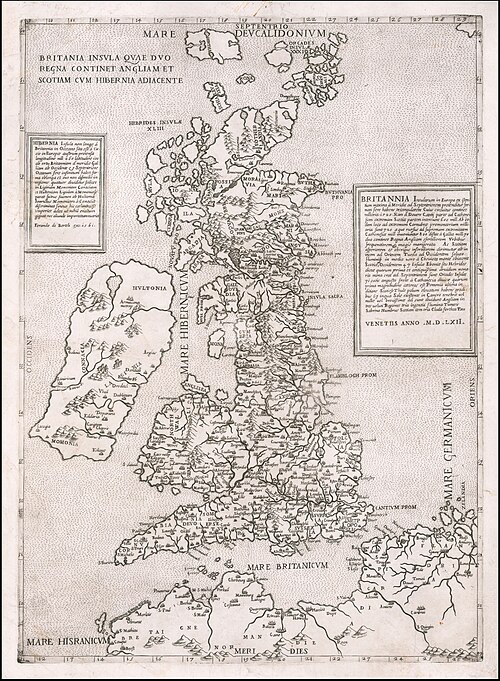
Most (but not all) English counties sent two members to Parliament. And most enfranchised English counties also sent representatives from smaller areas within them, called boroughs. The majority of boroughs returned two members, but at this time London returned four!
The number of boroughs within each county was not spread evenly. A few counties were heavily represented (Cornwall and Wiltshire had 37 boroughs between them) while others contained only one or two boroughs. However, the number of enfranchised boroughs increased steadily throughout this period.
Wales
Wales began sending its first members to Parliament in 1542, although the Welsh counties were entitled to send only one representative, rather than two.
France
In this period, England controlled some towns in northern France. After Tournai was captured by Henry VIII in 1513, it was promised the right to parliamentary representation and appears to have sent members to Westminster in 1514, and may have also done so in 1515. In 1536 Calais was granted the right to return members to Westminster in order to strengthen the town’s ties to England. It returned two members to every Parliament between 1536 and 1555.
Universities
In 1604 the franchise was restored to the universities of Oxford and Cambridge. They would return two members each until well into the 20th century.
Types of Voter
County elections
In county elections, the franchise was restricted by an Act of 1430 to property or landowners with a net income of at least forty shillings a year (known as forty-shilling freeholders). However, the Act was poorly worded and could be manipulated. In 1601 the sheriff of Rutland exploited this to disqualify as many of the supporters of one of the candidates as possible.
The number of men entitled to vote in county elections greatly increased during the sixteenth and seventeenth centuries due to inflation. Electorates were therefore commonly numbered in the thousands rather than the hundreds. In the 1625 Kent election, for instance, around 5,000 people turned out to vote.
Borough elections
In borough elections there was no universal form of franchise. In some cases the right to vote was limited to members of the corporation running the borough, while in others it was open to all the landowners, tax payers, or the inhabitants in general.
This meant that in some boroughs a very small number of people were entitled to vote. Old Sarum, in Wiltshire, had less than a dozen; Aldborough, in Yorkshire, had just nine. In other cases, the electorate would even be chosen in advance by the leading men of the borough; the real voting therefore was done when these powerful men themselves were selected to the town council.
Unofficial Voters
Non-voters could also have a big influence on elections. It was common for elections to attract large crowds, and determining who was or was not entitled to vote was not always easy, particularly if voting was conducted by ‘the cry’ (simply declaring who you wanted to vote for out loud!)
At this point, women were not expressly forbidden by law from voting; at Knaresborough in 1626 two women signed onto the list of electors! However, convention and social propriety largely prevented women from actually taking part in a vote.
Civil War Period
In 1640 the medieval rule limiting the franchise to those with an income of at least forty shillings from land still stood. Women, although technically able to vote in some cases, were almost always excluded from voting.
The number of people involved in an election in one of the larger counties could be several thousand. For the borough constituencies voting was often restricted to members of the governing corporation – typically the mayor and aldermen – but in some cases the freemen and even the householders could vote too. London, although having a population of around 375,000, had an electorate of only 4,000, as only citizens (members of livery companies) were allowed to vote.
Other constituencies had no justification for existing at all. The ‘rotten borough’ of Old Sarum in Wiltshire had only three eligible electors in 1640. Almost all seats, however large or small, returned two MPs, but some growing urban areas, such as Manchester and Leeds, did not have any parliamentary seats at all. Overall, it has been calculated that a third of adult males were eligible to vote in 1640, although there is not enough evidence to state this with any certainty.

There was an increase in voters in the 1650s due to changes in the electoral system. Under the Instrument of Government of 1653, the forty-shilling freehold rule was replaced by a requirement that voters should have £200 a year worth of property, whether in land or goods. At the same time, some small borough constituencies were stripped of the right to send members to Parliament, others were reduced to a single MP, and more county seats were created: Yorkshire, for example, now had 14 MPs. New boroughs were enfranchised, including Manchester, Leeds, Halifax and Durham. These changes certainly increased the electorate and opened voting to more people, but there were still political patrons who controlled a lot of the remaining boroughs or held sway in the counties. In any case, the reforms were reversed before the 1659 election, which reverted back to the old rules.
Georgian Period
In the 18th century the franchise remained very complicated. While more people were able to vote than might be assumed, the franchise depended heavily on where someone lived.
In county elections, the long-standing forty-shilling freehold rule still applied: electors needed to own property worth a rental value of forty shillings a year, or rent land to that value.
Voting in the boroughs was more complex, with many towns having different franchises. Some required membership of the corporation, others were much more free and enabled people to vote on the basis of long association with the town. In the case of burgage boroughs, wealthy patrons could easily buy up burgage plots to control the franchise and nominate their chosen Members of Parliament. The result was that in some places only very few people could vote, but in others like the city of London the voting population numbered into the thousands.
Voters needed to be over 21 years of age, but as in previous eras there was (strictly speaking) nothing to stop a woman voting if she qualified according to the terms of the local franchise. In reality, very few women voted, but there are cases where they did. Meanwhile, members of the House of Lords (peers and bishops) could not vote at all. There is also evidence in this period of the first Black British voters being recorded. There are two such records from the Westminster by-election of 1749.
Find out more on the first Black British voters:
Steps towards identifying new Black voters in 18th-century Westminster and Hertfordshire
John London: Britain’s First Black Voter?
Profile of an 18th century Black Voter: George John Scipio Africanus

1768, National Gallery of Canada via Wikimedia Commons
ECPPEC Project
For more information on English parliamentary elections from 1695-1832, visit the Eighteenth Century Political Participation & Electoral Culture (ECPPEC) project.
Victorian, Edwardian & Interwar Period
During the nineteenth century there continued to be two main types of constituencies: boroughs and counties, and the franchise differed between the two. Until 1885, the franchise was also different in England and Wales in comparison to Scotland and Ireland.
However, this period marked some major changes to the franchise.
Before 1832 the main franchise in English and Welsh counties was the forty-shilling freehold franchise, where all men who owned freehold property worth forty shillings (£2) a year in rental value or income could vote. This property could include land, houses or buildings, but also other types of property, such as shares. The owner of a freehold did not have to be resident in the county to be able to claim the right to vote there.
Scottish counties had a similar forty-shilling freehold franchise. In Irish counties the forty-shilling minimum threshold was increased to £10 in 1829. Another major change in 1829 was that Catholics, who had been excluded before, were allowed to become voters.
English and Welsh boroughs before 1832 had a wide range of different franchises. In some boroughs it was the freemen of the borough who had the vote. But in other boroughs the voting qualifications were a bit more complex. Here are a few examples:

Potwalloper
The ‘potwalloper’ franchise gave the vote to those with their own fireplace to boil a pot. This excluded people such as servants and those sharing a property.
Scot and Lot
In ‘Scot and Lot’ boroughs those who paid local rates on their house or business premises had the vote. Some boroughs also had a freeholder franchise similar to the county qualification.
Burgage
In ‘burgage’ boroughs the right to vote was attached to certain properties.
Corporation
In ‘corporation’ boroughs it was the members of the corporation (town council) who had the right to vote.
In Edinburgh before 1832, the members of the burgh council had the vote. In other Scottish burghs, the councils within a constituency each sent a delegate to a meeting to choose their MP. Irish boroughs had a similar mix of voting qualifications to England and Wales.

The freeholder franchise was kept in the counties in 1832 and new qualifications were added. These were based on owning or occupying property. As well as certain leaseholders and copyholders, they included votes for tenants occupying property worth £50 a year.
The 1832 Reform Act removed this patchwork of different borough franchises. It gave the vote to those who owned or occupied properties worth more than £10 a year in rental value. This could be a house, shop, warehouse or other building. They had to have occupied their property for at least a year and to have paid their local taxes. Borough voters were not allowed to have received poor relief. Unlike county freehold voters, all borough voters after 1832 had to be residents in their constituency.
Most borough voters who had the franchise due to traditional rules before 1832 were allowed to continue to vote after the Reform Act. They had to meet certain requirements, such as living within seven miles of the borough. These were known as ‘ancient rights’ voters. But in some constituencies with a wide franchise before 1832, such as Preston, the number of voters fell after the 1832 Act.
By 1833, around 18% of adult men had the vote, compared with an estimated 11% before the 1832 Reform Act. By 1866 this had increased to 20%.
For the first time, the 1832 Reform Act specifically restricted the parliamentary vote to men. It also introduced an annual process of registration for voters, who in the boroughs had to pay a fee. Like today, local government officials compiled the electoral registers. But the political parties played a major part in making sure their own supporters were on the register and trying to remove their opponents.
In rare cases, women were accidentally included on the register for parliamentary elections. A female shopkeeper named Lily Maxwell actually cast her vote at Manchester in 1867.
For more on the impact of the 1832 Reform Act
Who could vote? From potwallopers to ten-pounders: post-1832 franchises explained
How many people could vote in the UK after the 1832 Reform Act?
Marrying for the vote: the freedom by marriage franchise before 1832
“Register, register, register!”: Political activity in October
In 1867 there were significant changes to the borough franchise. All male householders could claim the vote, removing the £10 qualifying limit, but they still had to have lived in their property for at least a year and paid their rates. The 1867 Reform Act also gave the vote to ‘lodgers’ in boroughs who rented part of a property worth more than £10 a year.
In counties the forty-shilling freeholders remained. The threshold for the value of copyhold and leasehold property was cut in 1867 from £10 to £5. The £50 tenant franchise was reduced to £12 (£14 in Scotland). Those receiving poor relief were not allowed to claim the county vote after 1867. In Ireland the £10 household franchise in boroughs was reduced to £8 in 1850 and to £4 in 1867. In Irish counties those occupying properties with a value of £12 or more were given the vote in 1850. As a result of these changes, around 34% of adult men had the vote in 1868.
In 1884 the same franchises were rolled out across England, Wales, Scotland and Ireland. The householder and lodger franchises used in boroughs were extended to the counties. Existing voters with other qualifications kept their ‘ancient rights’.
Some people – around 550,000 in 1910 – had votes in more than one constituency. These were known as ‘plural’ voters. They owned property entitling them to vote in more than one constituency or had an additional vote for one of the university constituencies.
By 1911 around 60% of adult men had the parliamentary vote. Those who did not meet the property qualifications included men living with their parents, lodgers renting rooms worth less than £10, domestic servants living with their employers and soldiers living in barracks. The need to have lived in the property for a year also prevented some men from claiming the vote. So too did the complicated process of registration.
In 1918 the franchise for men was made much simpler: six months’ residence in a property qualified them for the vote. This led to almost universal suffrage for men. The 1918 Representation of the People Act did away with ‘ancient rights’ qualifications. It also removed the rule that people receiving poor relief could not have the vote. Passed in the year that the First World War ended, it lowered the voting age for men in the armed forces from 21 to 19. It denied the franchise for five years to conscientious objectors who had refused to undertake war work.
Men who occupied business premises worth £10 a year could register for a business vote. If their home and business were in different constituencies, they could have two votes. University graduates were also allowed to vote for the university constituencies. Only one extra vote per person was allowed from 1918.
Women aged 30 and over were given the parliamentary vote in 1918. Unlike men, they still had to meet a property qualification for the vote. They or their husband had to occupy either land or other premises worth £5 a year or a house. This excluded around 22% of women over 30, including domestic servants and women living with their parents. Female graduates aged 30 and over could also qualify to vote for university constituencies.
In 1928 women and men were given the same rights to the vote: the equal franchise. All men and women aged 21 and over who lived in a property for six months could vote. There were still plural votes for university graduates and occupiers of business premises.
For more on female political participation in this period:
The Victorian female franchise
John Stuart Mill’s women’s suffrage amendment, 20 May 1867
Further Reading
Neil Johnston, ‘The History of Parliamentary Franchise’, House of Commons Library Research Paper, 13/14, 1 March 2013
Philip Salmon and Kathryn Rix, ‘Who should have the vote? What electoral rights did Britons have in the century before 1918?’ History Today (August 2018)
Post-War Period
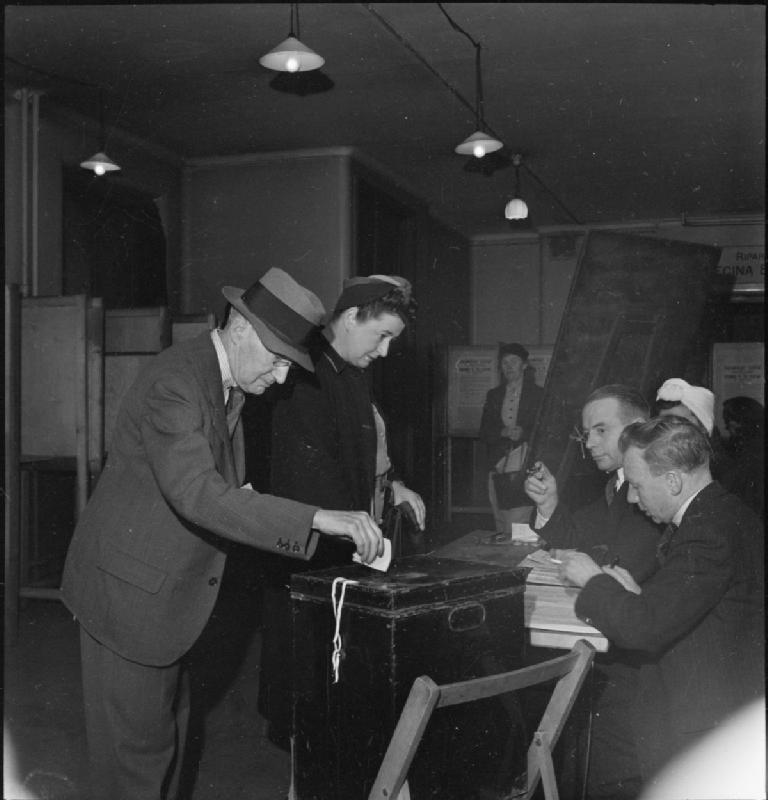
After 1945 the principle of ‘one [person], one vote’ was settled; after all the country had just fought the Second World War in part to defend democracy. During this period only small changes were made to who could vote.
In 1948 the last instances of plural voting were removed and university constituencies abolished. Most significantly, the voting age was reduced in 1969 from 21 to 18, following increased youth involvement in politics and other legislation lowering the legal age of adulthood. In devolved legislatures in Scotland and Wales, the voting age was lowered to 16 in 2015 and 2020, respectively, but this does not extend to Westminster’s UK-wide elections.
Other changes looked to regularise the voting system. In 1948 the Redistribution Act was the last time constituency boundaries, seats and sizes were changed by an Act of Parliament. The 1949 Representation of the People Act instead created the Boundary Commission to review the number and size of parliamentary constituencies. Seats are reviewed periodically and reflect changing political priorities as well as demographic changes, for example, the reduction of Scottish MPs following Scottish devolution.
Throughout the post-war period there has been growing criticism from some of the ‘first-past-the-post’ electoral system. Although the 1997 Labour government established the Jenkins Commission to investigate, it led to no changes. Following the 2010 coalition agreement between the Conservatives and the Liberal Democrats, in 2011 a referendum was held on changing the voting system to the ‘alternative vote’ system. This was rejected by 68%-32%.