
Magna Carta is a royal charter sealed by King John at Runnymede on 15 June 1215. This document put into writing for the first time the principle that no Monarch or their government was above the law.
Other key principles that Magna Carta implemented were that the English Church should be free from royal interference, the King would govern by law and not his will, and he should provide justice for his subjects.
This document was created as a peace treaty intended to prevent civil war between the King and his barons. In an attempt to raise money to recapture lands lost in 1204, King John put heavy financial demands on the English barons, who in turn rebelled against these taxes. John depended on the barons’ money and support, so met with them at Runnymede to negotiate.
Once Magna Carta was sealed King John conceded that he would not charge taxes without approval from a representative council. However, the agreement failed almost immediately when Pope Innocent III cancelled it a few weeks later.
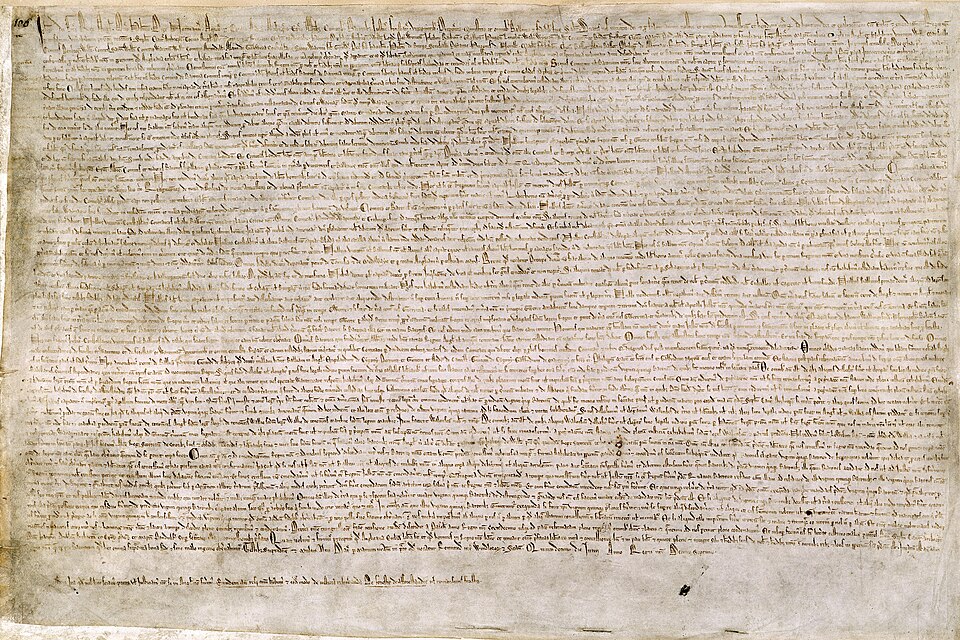
After John’s death, Magna Carta was reissued in 1216 and 1217, although it left out some of the more controversial clauses. It was reconfirmed several further times in the 13th century and was later confirmed by Edward I as an integral part of English law in 1297.
There is debate on how far Magna Carta was, in the medieval period, a profound constitutional document, being born originally as a charter protecting the privileges of English barons. Even so, it became a powerful tool used to shape British laws and government for centuries to come.
Although Britain does not have a single written constitution, there are a series of key documents and decisions, like Magna Carta, introduced throughout history that have become foundational to defining the rights and powers of the government, and those it governs…
Tudor and Early Stuart Period
Magna Carta continued to have vital importance during the Tudor and Stuart periods. Successive reigns during this period display how Magna Carta impacted various aspects of English governance.
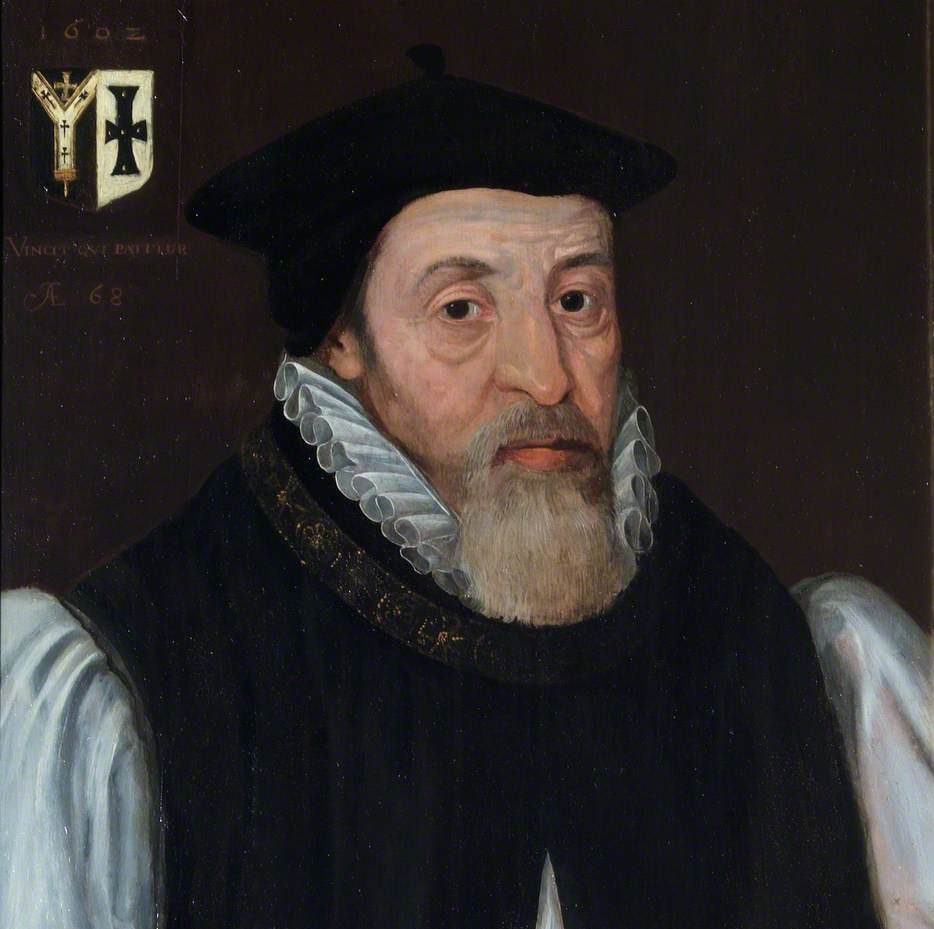
While long familiar to lawyers, until the 1580s Magna Carta was considered an important statute (law) rather than a core part of England’s constitution. Its change in importance was caused by the appointment of John Whitgift as Archbishop of Canterbury in 1583.
From the mid-1580s, Whitgift made a series of demands on the clergy in an attempt to stamp out ‘nonconformity’. This included the endorsement of certain religious statements, with those who refused at risk of losing their church income. Robert Beale, MP for Dorchester, gave a speech in Parliament which made a direct appeal to Magna Carta, arguing that Whitgift’s proposed changes were an attack on people’s religious freedoms.
References to Magna Carta were used again in 1601 to oppose a bill aimed at enforcing church attendance. Opponents argued that the bill violated a core principle set out in Magna Carta that no person should be convicted of an offence without a proper inquiry into the facts. Magna Carta was therefore being used to defend certain rights across this period.
The 1604 Magna Carta bill
In 1603 James VI of Scotland ascended the throne of England and his first English Parliament met in March 1604. On 22 March, three days after the State Opening of Parliament, the new King addressed both Houses and announced that he expected Parliament to unite his two kingdoms. However, many English lawyers were concerned that were a new kingdom (Great Britain) to be created, all English law would be erased. The House of Commons included a large group of lawyers, among them the London MP Nicholas Fuller, who announced that James’s proposed Union would mean ‘No Magna Carta’.
A bill to confirm Magna Carta within the constitution of the new kingdom was therefore introduced just four days after James’s speech. However, the document was soon deemed unfit and a replacement bill was drafted by committee. But this was never approved and did not go any further. The reason for this remains unclear.
Corporations and monopolies
In 1621 the Commons debated a bill to confirm clause 29 of Magna Carta. The purpose of the bill was to prevent wrongful imprisonment. This was a fate that was, according to the jurist and former judge Sir Edward Coke, becoming increasingly common in this period. Coke protested that monopolies granted by the crown to corporations giving them the power to imprison anyone for breaking their bye-laws was ‘against all law’. However, once again, the bill was not passed.
The 1628 Petition of Right
In 1626, following a period of turmoil, Charles I ended Parliament without first gaining the support he needed to raise vital taxes. Instead, Charles imposed a forced tax on wealthier subjects without their consent. No fewer than 70 gentlemen who refused to pay were imprisoned on the orders of the Privy Council. When five of these men wanted to know the reason for their detention (demanding a writ of Habeas Corpus) the Council simply replied that they had been imprisoned on the orders of the King and would not be allowed to stand trial.
Before this, the Monarch’s power to detain individuals without trial had rarely been challenged so directly. But now it was bound up with the subject’s right to grant consent to taxation – a key tenet of Magna Carta.
Driven by financial desperation, in 1628 Charles was forced to summon another Parliament. In an attempt to appease the Commons, the King offered to uphold Magna Carta and confirm the rights and liberties of his subjects, but his vague wording left Parliament wanting more. Charles was instead only able to obtain the money he desired by first consenting to Parliament’s Petition of Right, which declared that unparliamentary taxation and imprisonment without trial was illegal. The Petition of Right is widely considered alongside Magna Carta as a key document in forming the English constitution.
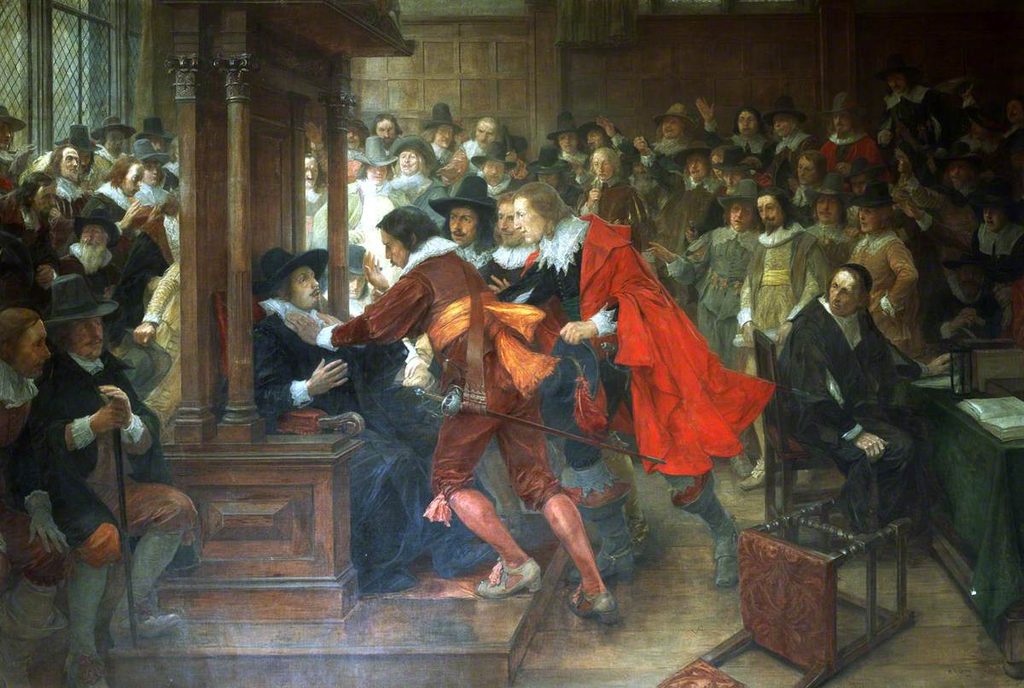
The resolution was short-lived. When Parliament reassembled in 1629 Charles was accused of breaking the Petition, as he continued to raise customs duties (Tonnage and Poundage) without parliamentary consent. After a dramatic series of events including the Commons Speaker being held down in his chair to forcibly pass Parliament’s measures, Charles closed Parliament and did not summon it again for eleven years. This became known as Charles’s period of ‘Personal Rule’.
Further reading
Roger Lockyer, The Early Stuarts: a Political History of England 1603-1642 (1999)
Proceedings in the Parliaments of Elizabeth I, ed. T. E. Hartley (1995)
E. Nicholas, Proceedings in the Parliament of 1621 (1766)
Civil War Period
The civil wars and interregnum saw dramatic constitutional upheavals.
From 1642 Parliament broke with tradition by legislating for itself without royal assent, and also took on the kind of executive powers that previously belonged to the Monarch. In 1649 the monarchy and the House of Lords were abolished, and a republican Commonwealth established, with the House of Commons claiming sovereignty on behalf of the people of England.
Instrument of Government
Following the collapse of the Barebones Parliament in 1653, an entirely new form of government was introduced through the Instrument of Government. This written constitution gave executive power to the newly created ‘Lord Protector of the Commonwealth’, with Oliver Cromwell the first person to hold the role. Although there were technically a number of checks and balances intended to prevent the Lord Protector from exercising absolute power, Cromwell soon found a way to work around these and the power of the army, which he controlled, grew.
The Humble Petition and Advice
In 1657 the Instrument of Government was replaced by The Humble Petition and Advice (the second and last written constitution the nation would have). This was intended to rein in some of the army’s power and propose a solution to Cromwell’s declining health, including reinstating a form of the House of Lords referred to as the ‘Other House’. While Cromwell declined to accept the title of ‘King’ that was proposed in this document, he agreed that the Lord Protector title would be handed down to his son Richard upon his death.

Oliver Cromwell, Samuel Cooper (1656), © National Portrait Gallery, London, CC BY-NC-ND 3.0
Despite Cromwell’s attempts, his written constitution was ultimately a failure, and the memory of these attempts would inform later approaches to a ‘constitutional’ monarchy.
Very few of the constitutional innovations introduced during the Commonwealth survived after the monarchy was restored in 1660. When Charles II returned to England to take up his father’s throne, he was keen to re-establish legitimate government and made great efforts to erase the previous 18 years from memory.
Every law passed without royal assent during the Commonwealth was declared null and void, removing around 1,200 pieces of legislation. What remained in force was a handful of Acts passed in 1641-2. Some of these established important principles which helped to shape constitutional arrangements in England for decades to come. Perhaps the most important was the Triennial Act of 1641, which laid down that Parliaments must be called every three years, regardless of whether that suited the King. This, a tentative step towards the modern practice of holding consecutive Parliaments, was arguably the most enduring constitutional document of the ‘English Revolution’.
Late Stuart and Georgian Period
The Bill of Rights
After Charles II’s restoration in 1660, many were hopeful about a return to political stability, but this would not be the case. The protectorate had left the nation with a high amount of debt and concerns about corruption in the King’s court soon arose. Furthermore, MPs – who were Protestant (Anglican) at the time – worried about a rise in Catholic sentiment at court.
When James II (who had secretly converted to Catholicism) came to the throne in 1685, his indication that he would maintain the established Protestant Church was not matched by his actions. James attempted to repeal historic laws that made it illegal for Catholics to hold government positions and in 1687 he issued the Declaration of Indulgence, which sought to move towards greater religious freedom. Many in Parliament worried about what this meant for the nation.
In 1688 a letter was sent by parliamentarians to William of Orange, who was married to James’s daughter and heir Mary. It invited him to lead an invasion to depose James II, often referred to as the ‘Glorious Revolution’.
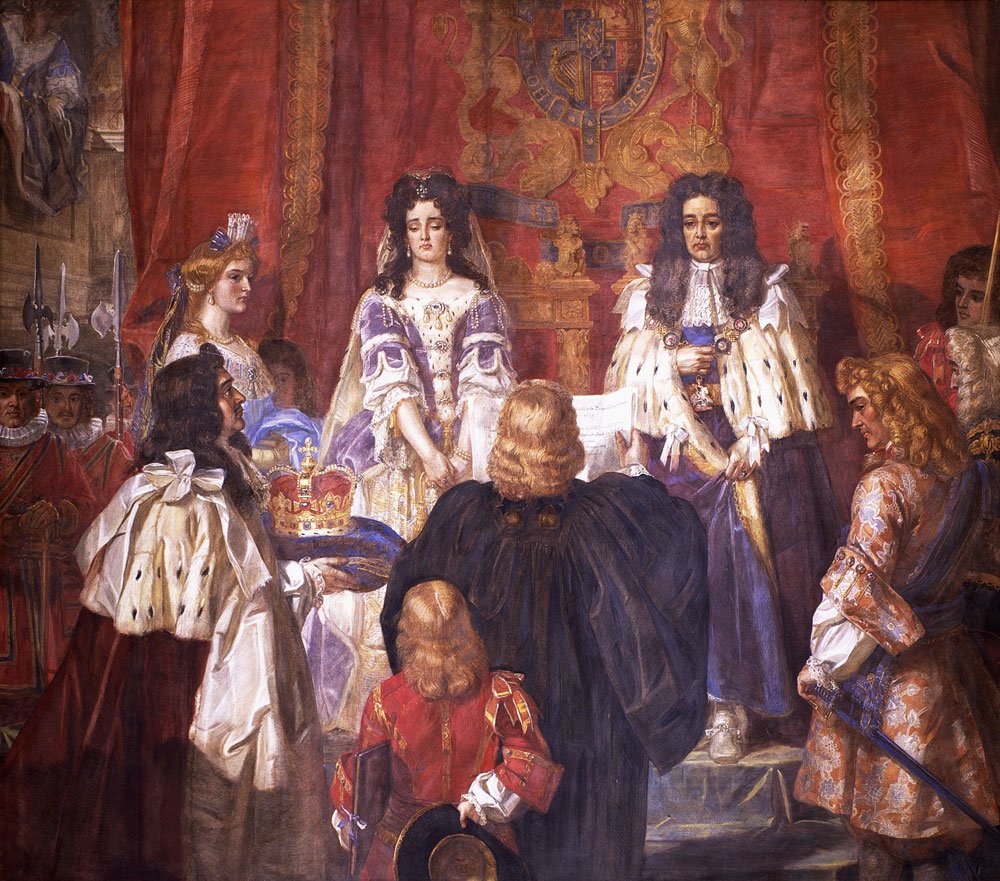
After James II’s escape to France, a Convention Parliament met in early 1689 to discuss how the abuses of government and law witnessed under the previous two monarchs could be avoided. This culminated in the Bill of Rights.
William and Mary were offered the throne, on the condition that they accept this document, which stated that it was illegal for the crown to suspend the law, or raise money without parliamentary assent, and insisted on due process in criminal trials. The limitations imposed by the Bill meant that, for the first time, the power of Parliament could officially be seen to be greater than that of the Monarch. Although not a constitution, this document’s assertion of the rights of subjects puts it alongside Magna Carta in its importance in shaping the English system of power.
Magna Carta in the 18th century
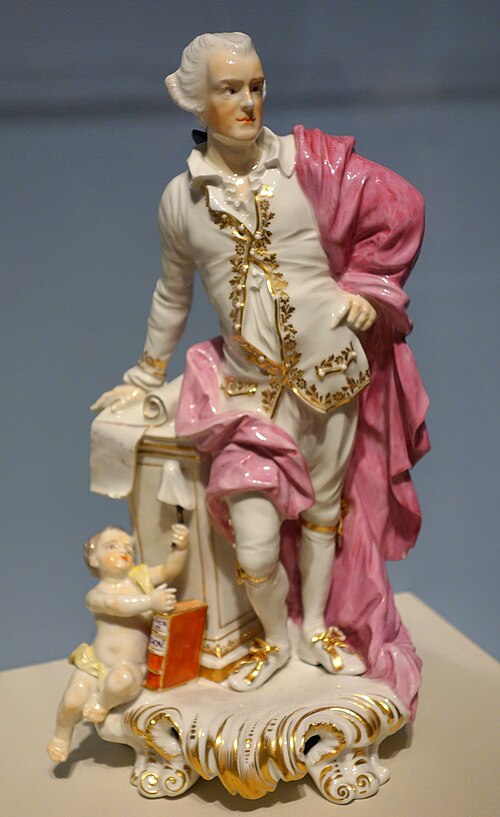
Magna Carta was referenced throughout the 18th century by politicians across the spectrum. It was also frequently depicted within political satires and material culture of the period. For example, a Derby porcelain figure of John Wilkes showed him leaning on scrolls inscribed Magna Carta and the Bill of Rights. The figure of Britannia was also often shown clutching a copy of Magna Carta.
However, this period also saw many important Acts, events and rulings by judges which impacted the constitution of England and then Great Britain:
19th and early 20th Century
The most significant constitutional changes during the 19th and early 20th centuries related to the structure and composition of Parliament. Three major Reform Acts – in 1832, 1867 and 1884-5 – made important changes in two key areas: who had the right to vote at parliamentary elections, and which constituencies returned Members of Parliament to the House of Commons.
After the 1832 Reform Act around one in five adult men had the vote. This increased to around one in three after the 1867 Reform Act. The 1884 Franchise Act expanded this further, so that by 1911 around 60% of adult men had the franchise.
These reforms gradually included more men within the electoral system, but women were still excluded. They also removed seats from some constituencies, such as small or corrupt towns, and gave them to others, like growing industrial towns. In 1832 the majority of constituencies sent two MPs to the Commons, but from 1885 onwards, most constituencies were single member seats.
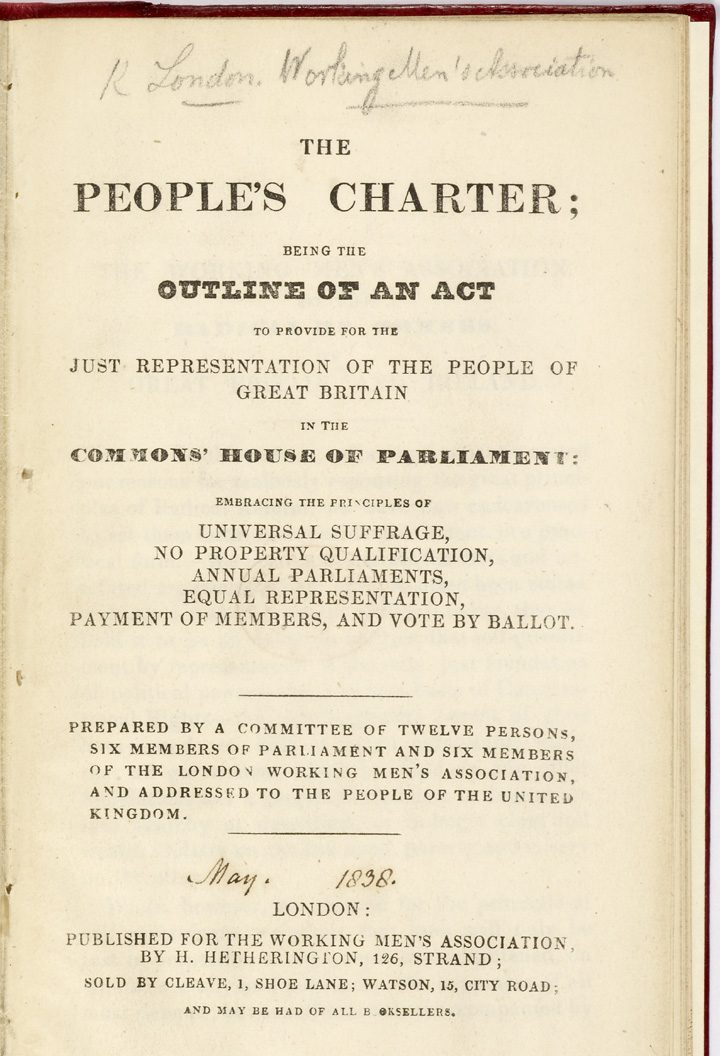
One of the most famous 19th century political documents was the ‘People’s Charter’. This was produced by the Chartists, a group that did not believe that the 1832 Reform Act had done enough for the working classes. Drawn up in 1838, the Charter’s ‘Six Points’ were:
· universal male suffrage (giving the right to vote to all adult men)
· the use of the secret ballot at elections
· holding parliamentary elections every year, rather than every seven years
· constituencies of equal size
· the payment of MPs
· the abolition of the property qualification for MPs.
The first national petition in support of the Charter gained over 1.25 million signatures and was presented to the House of Commons in June 1839, but it was rejected by Parliament.
The 19th century also saw different religious groups included within the political system. Restrictions which had previously prevented or made it more difficult for them to hold public office were removed. These reforms included:
Repeal of the Test and Corporation Acts in 1828
This repealed acts passed in the late 17th century which had been designed to bar non-Anglican individuals from taking public office.
The 1829 Roman Catholic Relief Act removed many of the barriers restricting Roman Catholics from sitting in Parliament and holding public office.
Jewish emancipation in 1858
The 1858 Jews Relief Act removed the barriers restricting Jewish people from sitting in Parliament.
The 1918 Representation of the People Act extended the franchise to almost all adult men. For the first time it gave the right to vote at parliamentary elections to some women. The 1928 Equal Franchise Act gave the same voting rights to men and women, who could vote from the age of 21.
Although this did not happen as a direct result of their campaigning, many of the reforms demanded by the Chartists eventually became law. The property qualification for MPs was abolished in 1858. The secret ballot was used at elections from 1872. Constituencies became more equal in size from 1885 onwards. Salaries for MPs were introduced in 1911 and universal male suffrage in 1918.
Further Reading
Reappraising England’s reformed electoral map, 1832-1868: the impact of the 1832 Reform Act
From draper’s apprentice to attorney-general: Sir John Rolt and the 1867 Reform Act
The 1868 Boundary Act: Disraeli’s attempt to control his ‘leap in the dark’?
Parliament versus the People: the Newport rising of 1839
Christmas at Newgate: Edward Glover MP and the abolition of the property qualification
‘Watched with considerable curiosity’: The first secret ballot in Britain, 15 August 1872
Post-War Period
Following the end of the Second World War, several key changes reshaped the British constitution. In 1911, the Parliament Act had stripped the House of Lords of its ability to block legislation passed by the Commons, allowing it only to delay bills for two years. The 1949 Parliament Act reduced this delay to just one year, firmly establishing the elected House of Commons as the most powerful chamber. Further modernizations followed:
- The 1958 Life Peerages Act created Life Peers (these could include women peers).
- The 1999 House of Lords Act removed the majority of hereditary peers.
- The 2005 Constitutional Reform Act removed the Law Lords from the chamber, with the newly created Supreme Court established as the highest court of appeal.
- The 2026 House of Lords (Hereditary Peers) Act removed all remaining hereditary peers from the Lords.
Voting Rights
Electoral reform also expanded democratic participation. In 1969, Parliament lowered the voting age from 21 to 18.
The European Union and Parliamentary Sovereignty
The UK’s constitutional relationship with international institutions saw dramatic shifts during this era. In 1972 Parliament passed the European Communities Act, allowing for the UK to join the European Economic Community. The major impact was that all European Community law (later European Union law, following the creation of the EU in 1993) was incorporated into UK law. Any conflicts were overseen by the Court of Justice of the European Union. Following the ‘Factortame’ judgment in 1990, EU law had supremacy over UK Acts of Parliament.
This supremacy always had opponents within the UK, who argued that the UK Parliament ought to remain entirely sovereign. Flashpoints included the debates over the confirmation of the 1993 Maastricht Treaty or proposals for the UK to join the Euro single currency. In 2016 the UK voted in a referendum to leave the European Union. In 2018 the European Union (Withdrawal) Act removed the provision that EU legislation automatically became UK law. All EU law was transferred to the UK statute book, giving the UK government the power to amend these laws. UK courts are no longer bound by decisions of the Court of Justice of the European Union.
Devolution and Power Sharing
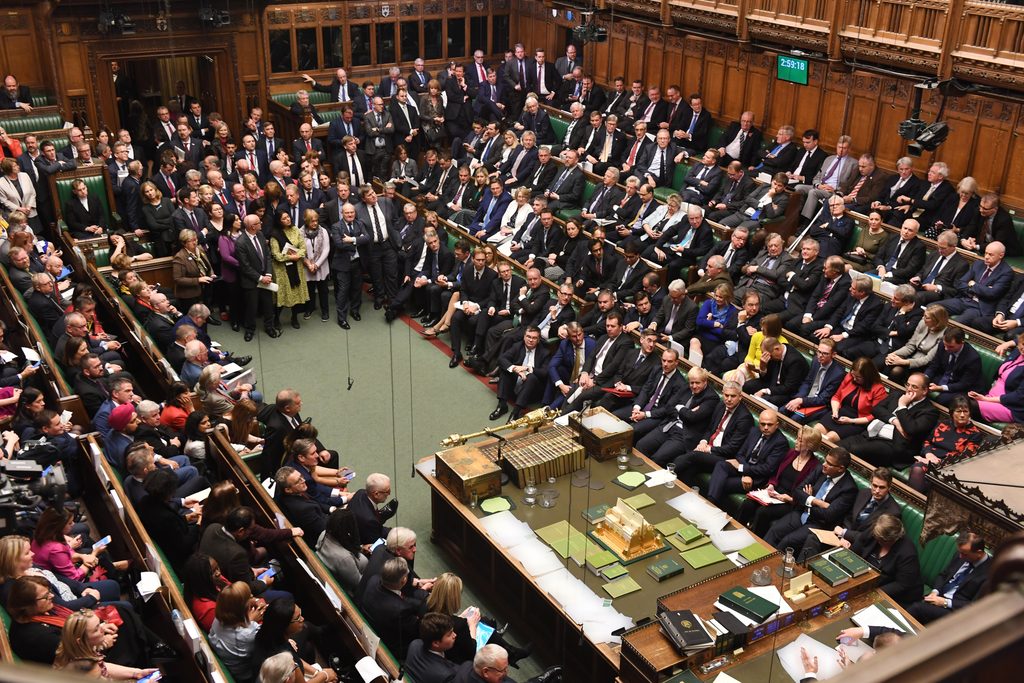
Reforms to the internal working of the UK also took place at the turn of the 21st century. Powers were devolved to Parliaments and Assemblies in Scotland, Wales and Northern Ireland, and these bodies now make decisions over certain areas of legislation in these nations, for example, health policy, whilst the Westminster Parliament remains sovereign.
Devolution played a vital constitutional role in Northern Ireland. The 1998 Good Friday Agreement established a mandatory power-sharing executive between nationalist and unionist political parties. Following Brexit, Northern Ireland’s unique position was further refined by the Windsor Framework (2023), which allowed Northern Ireland to remain aligned with parts of the EU single market to protect cross-border trade and peace agreements.
Key Acts/Events
1949 Parliament Act
This act reduced the time that the Lords can delay bills passed by the Commons from two years to one. In this period the ‘Salisbury convention’ emerged, which states that the Lords will not block bills included in a government’s manifesto.
1958 Life Peerages Act
This allowed the government to create peers for life as well as hereditary peers. Under this act women could sit in the Lords for the first time. The first hereditary women peers were allowed to sit after the 1963 Peerage Act.
1969 Representation of the People Act
This lowered the voting age to 18.
1972 European Communities Act
This prepared the UK to join the European Economic Community in 1973. It stipulated that all European Community (later European Union) law became incorporated into UK law.
1998 Human Rights Act
The act wrote the European Convention on Human Rights into domestic law. UK courts could now judge on human rights cases and it became unlawful for any public body to not follow the Convention.
Devolution Acts (1998-9)
Following referendums in Scotland and Wales (1997), and the Good Friday Agreement in Northern Ireland (1998), the Scottish Parliament and Welsh and Northern Irish Assemblies were created (1998 Acts). These acts devolve certain powers to these bodies, although Parliament remains sovereign. There have been some subsequent changes to these arrangements, such as the 2006 Government of Wales Act.
This removed all but 92 hereditary peers from the House of Lords, following a compromise with the Lords. Further proposed reforms did not take place.
2005 Constitutional Reform Act
This removed the judiciary (the Law Lords) from the House of Lords to a new Supreme Court, created in 2009, that acts as a final court of appeal.
2018 European Union (Withdrawal) Act
This repealed the 1972 European Communities Act, transferring all EU law onto the UK statute book and allowing the UK government and Parliament to amend these statutes. This provided the basis for the UK to leave the European Union in 2020.