Who created the modern game of lawn tennis? As Dr Naomi Lloyd-Jones discusses, one possibly surprising 19th-century pioneer could have been Sir William Hart Dyke, a champion sportsman best known as Disraeli’s chief whip, who claimed to have played the first game and drawn up the rules.
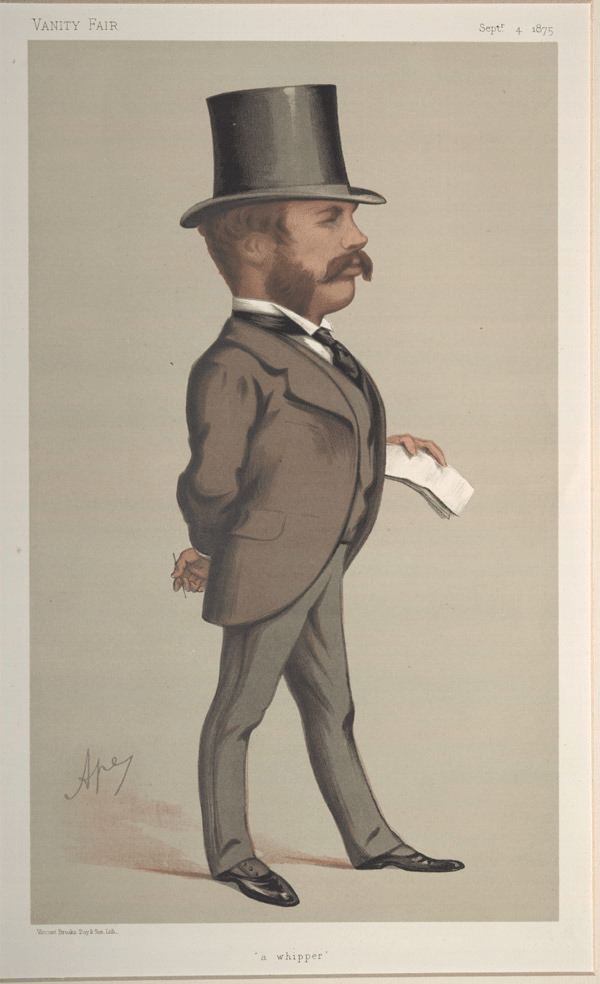
Sir William Hart Dyke (1837-1931), a Conservative MP in Kent for four decades, is perhaps best known for the six years he spent as Benjamin Disraeli’s chief whip in the 1874-80 government. Yet, around the same time, he was, apparently, also helping to invent the modern game of lawn tennis. Having been a champion sportsman in his youth, toward the end of his life Hart Dyke staked a claim to have played the ‘first game’ at his estate in Kent, and to have helped draw up the rules in just a few hours.
When Hart Dyke was first elected, in 1865, his sporting prowess was one of the things his supporters highlighted to justify the candidature of a 27-year-old, otherwise little known to his West Kent constituency. Only three years earlier Hart Dyke had become the first amateur to win the open championship in rackets – something it would take a further 74 years for another amateur to do. At Oxford University, where he was known as ‘Billy’ Dyke, he won the annual singles and doubles rackets matches against Cambridge three years in a row. In the decades that followed he was often referred to as ‘the best rackets player of his day’ and was, supposedly, ‘one of the quickest men ever seen in a court’.

In 1927, in an interview with the London Evening News to mark his 90th birthday, Hart Dyke claimed that he had in 1873 been part of a small group that ‘framed the rules for lawn tennis as it is now played’. This was, he said, something that took them only ‘about two hours to do’. In 1873 he was chief whip for the Conservative Opposition.
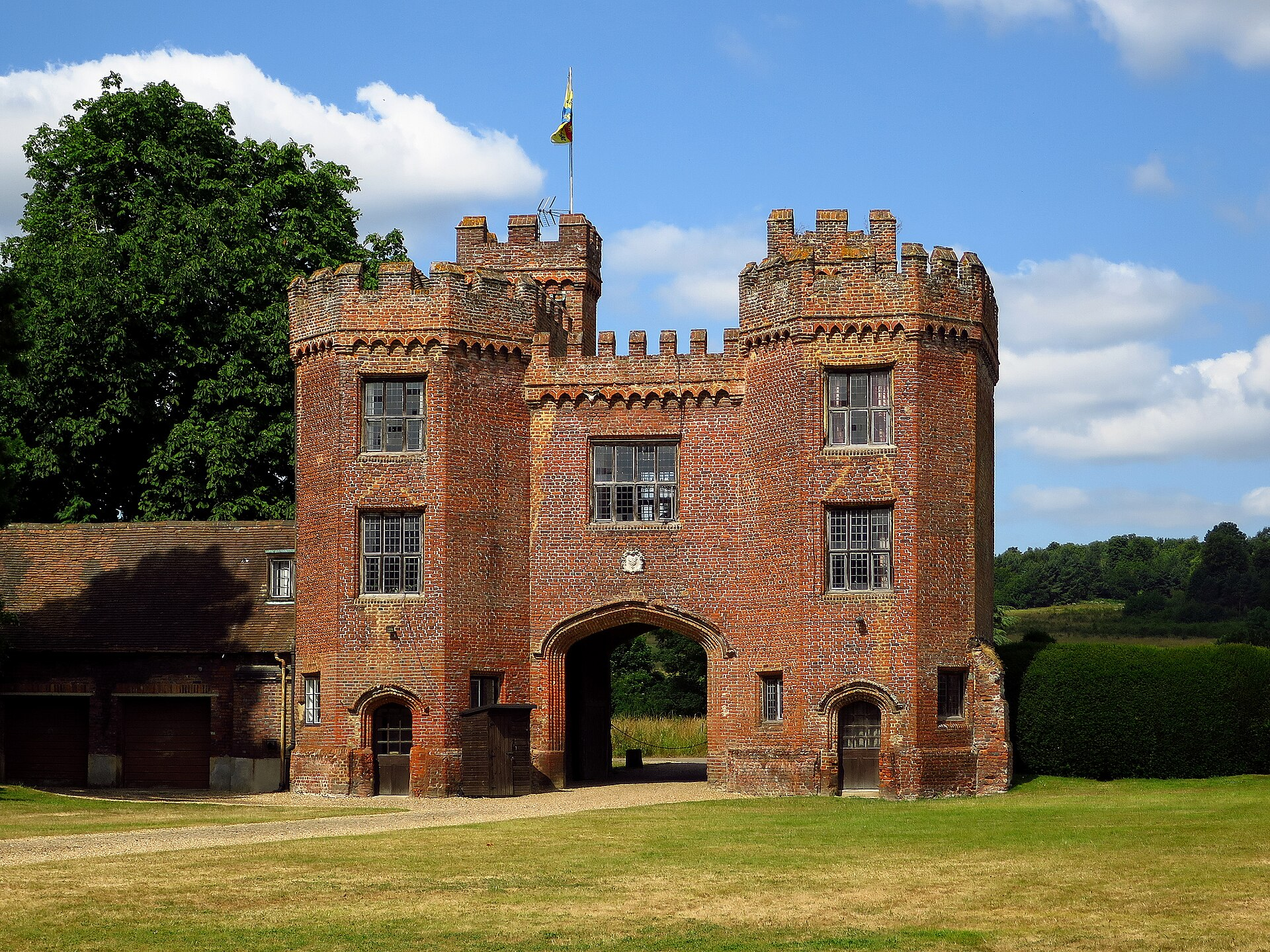
Hart Dyke elaborated on this story two years later, in an interview with the Daily Express, prompting the paper to dub him the ‘inventor of lawn tennis’. At his home at Lullingstone Castle, near Eynsford in Kent, Hart Dyke gestured to the gardens and said, ‘I played the first game of tennis out there’. He explained that in 1873 he had ‘laid down a court on [his] lawn’, which involved putting down ‘side-lines and base-lines – and a net across the centre’. It is believed that the occasion had been a weekend party at the estate. Hart Dyke also remembered that the chief difficulty they faced had been where to place the service line. He decided on a position nearer to the base line than the net, so as not to unduly advantage a tall player, who could otherwise ‘slash his service down from above’.
According to Hart Dyke, the rules were drawn up soon afterwards, in the pavilion at Lord’s, home of the Marylebone Cricket Club (MCC), which had recently settled the rules for real tennis. The work was done by Hart Dyke and two of the friends, and fellow real tennis players, with whom he had played at Lullingstone, Julian Marshall (1836-1903) (whose father and grandfather had been MPs) and John Moyer Heathcote (1834-1912) (whose father had been elected for Parliament in 1857 but, as his return was invalidated, never took his seat). Hart Dyke described their rules as ‘simple enough’ – so much so that they were ‘to all intents and purposes the same’ in 1929 as in 1873. The position of the service line, on which ‘the whole success of the game depended’, had likewise remained the same, ‘to an inch’.
Hart Dyke also claimed to have been ‘one of the first’ people to ‘give a real impetus’ to the modern game of squash, which developed from rackets. A rackets champion at Harrow School, in the early 1860s he was responsible for fundraising for new courts there and spent some of the money on what he said were the first squash courts ‘built anywhere’. To mark their opening in early 1865, he played an exhibition match, shortly after announcing that he would stand for Parliament.
In these interviews, Hart Dyke offered an insight into the physical endurance sometimes required of 19th-century politicians. He recollected that when he was a whip, and later chief whip, in the 1860s and 1870s, he had ‘no fixed seat’ in the House of Commons and, as there was no whips’ room, he and his colleagues worked mainly in the lobby. This meant he was ‘on [his] feet continuously’. Yet Hart Dyke insisted that, despite ‘strenuous’ parliamentary crises and ‘frequent all-night sittings’, he was never ‘fatigued’ or made ill by his work. He put this down to regularly playing rackets and tennis, both real and lawn, requiring ‘plenty of running about’, which kept him ‘very fit’. He frequently played with Edward, Prince of Wales, who was ‘not much good’. In his 90s when interviewed, Hart Dyke was described by reporters as ‘a sprightly young-looking figure’, who was ‘still amazingly fit’.
Hart Dyke was not the only tennis player in the family. His wife Emily told the Express that she had been ‘one of the first girl players’, playing with her sister in the gardens of her father, the 7th earl of Sandwich’s, house. Born in 1846, her remark suggests that the game, or a version thereof, was being played at private residences long before 1873. Emily added that, in order to play, the girls would have to adjust their clothing: they would ‘take off their “cages”’ from their dresses, ‘leaving an underskirt reaching to the ankles’, which they would then ‘tuck up’. Like Hart Dyke, she lived into old age, appearing in pageants and playing the drum in a local orchestra in her 70s and 80s.
There were other claimants to the mantle of founder of modern tennis. Perhaps the best known is Major Walter Clopton Wingfield. In early 1874 Wingfield applied for a patent for a game called Sphairistike, supposedly named after the Greek word ‘sphairos’, for its relationship to ‘ball’, and intended as a ‘new and improved’ way of playing an ‘ancient game’. He soon after published a booklet, Sphairistike – or Lawn Tennis, which contained designs for an hourglass-shaped court and rules for play. The booklet was dedicated to a group of wealthy and aristocratic individuals who had assembled at Nantclwyd, north Wales, in December 1873, where he claimed the game was demonstrated – seemingly a few months after Hart Dyke would later insist his game was held. In a further political connection, it was rumoured that Wingfield had as early as 1869 shown the game to the 5th Marquess of Lansdowne, a future viceroy of India and Liberal foreign secretary, who played it with friends throughout that summer, and that it was Arthur Balfour, later Conservative prime minister and a tennis enthusiast, who persuaded Wingfield to include ‘lawn tennis’ as an alternative moniker.
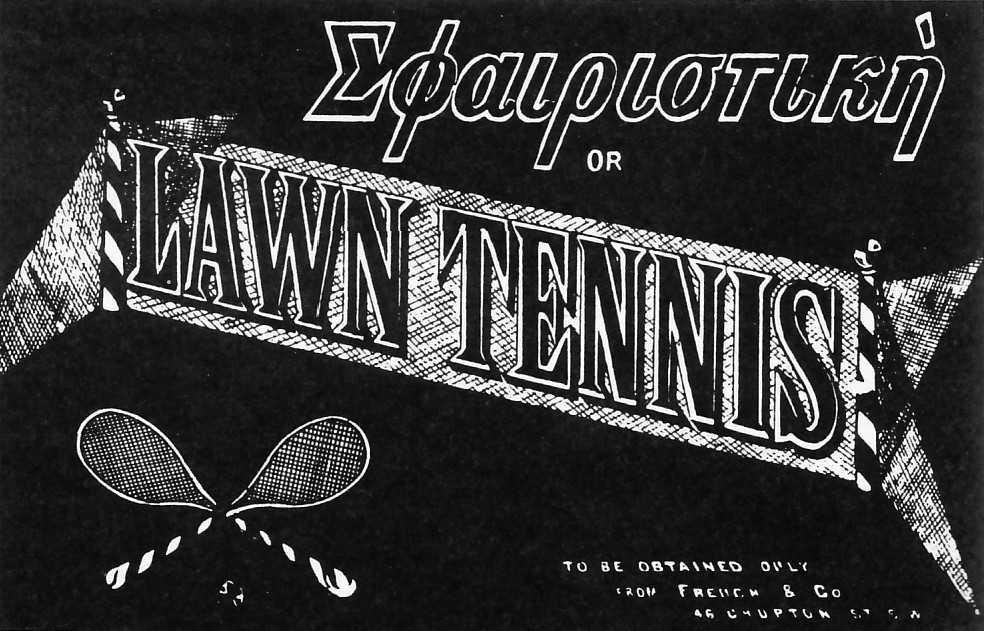
When presented by the Express journalist in 1929 with a by-then rare copy of Wingfield’s 1874 booklet (found in a second-hand store), Hart Dyke said he had never seen it before. Wingfield also sold Sphairistike – which gained the nickname ‘Sticky’ – kits in boxes, containing poles, a net, pegs, rackets and rubber balls. He was soon hit with counterclaims that a version of the game had been played in clubs and private gardens for decades and even when he died in 1912 there were questions over whether he had been one of its ‘actual pioneers’. By contrast, although it was recognised in the late 1920s that there remained differences of opinion over the beginnings of lawn tennis, Hart Dyke’s version of events was met with curiosity, not hostility. When Hart Dyke died in 1931, obituaries credited him as one of the ‘originators’ of the sport. Yet today it is Wingfield, not Hart Dyke, who is more typically mentioned as such.
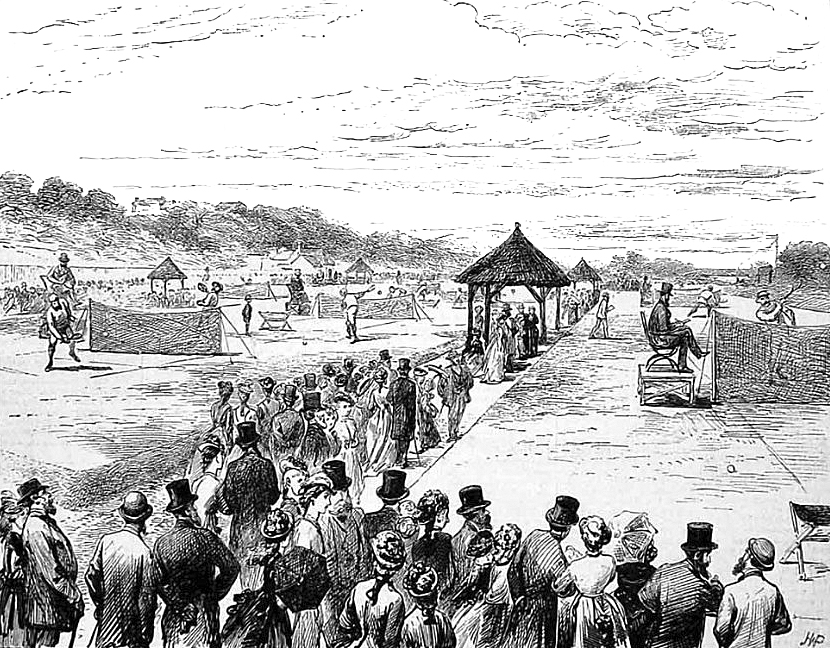
In early 1875, amid mounting debate about how the increasingly popular lawn tennis should be played, the MCC decided that formal rules should be published. According to Heathcote’s 1890 book on the history of tennis, Hart Dyke was part of a five-man MCC tennis committee that drew up the new code at Lord’s. However, it makes no mention of an equivalent group or set of rules from 1873, or the Lullingstone game. The first Wimbledon championship was played in 1877, under rules established by a group that included Marshall and Heathcote’s brother. In 1929 Hart Dyke concluded his Express interview by stating that although life was ‘too short to quarrel’, it was his ‘distinct recollection’ that ‘we started lawn tennis in 1873’.
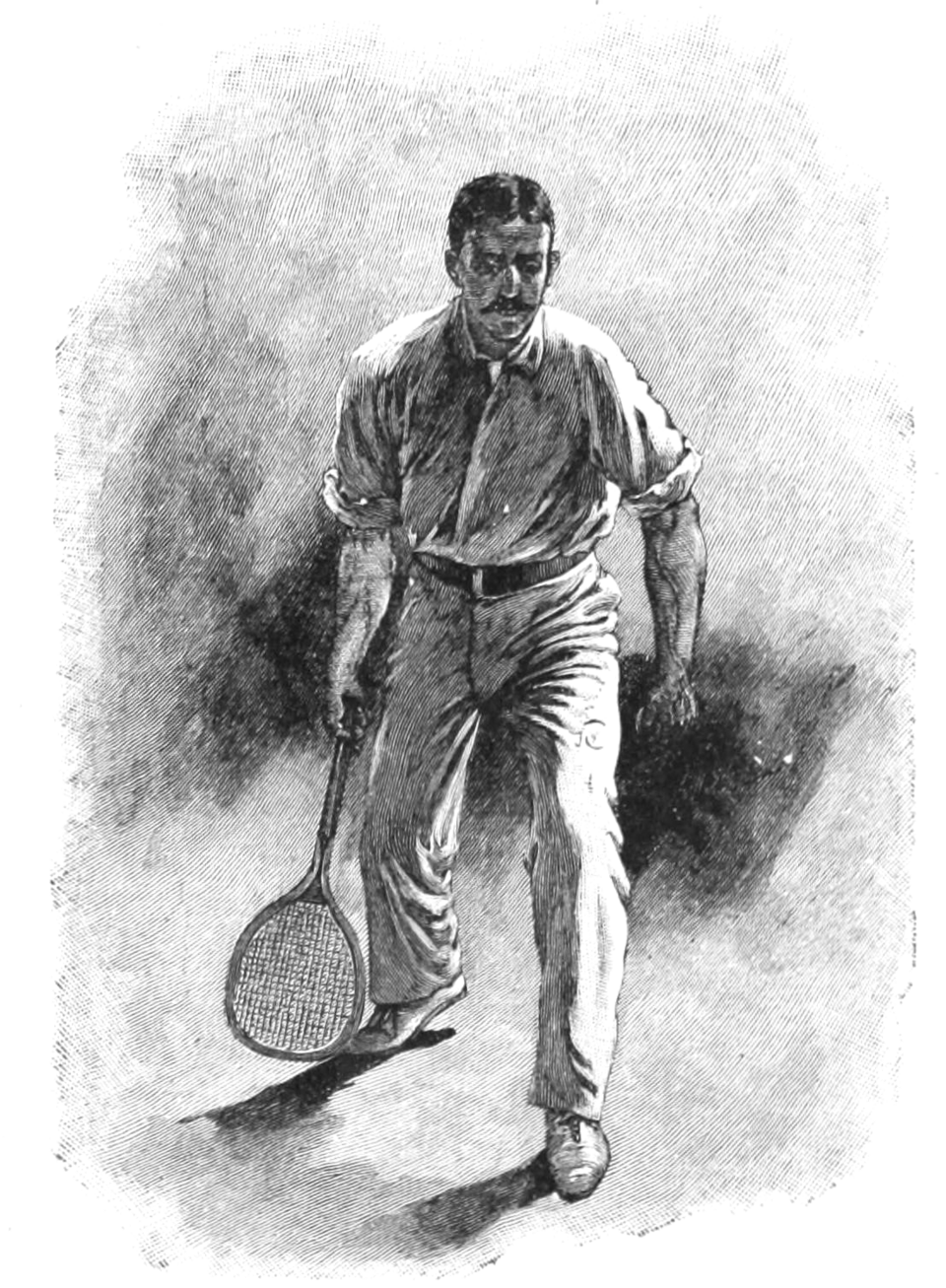
The legend of the 1873 game was not forgotten at Lullingstone. Sixty-five years later, in 1938, a re-enactment was staged on the lawn near the old gatehouse, organised by the North Kent Lawn Tennis Association. Participants followed the rules, ‘style, implements and dress’ of the time, and three men ‘impersonated’ the ‘Lullingstone trio’ of Heathcote, Marshall and Hart Dyke, the last of whom was identifiable by an enormous moustache and mutton chop whiskers. Prizes for the best ‘period costumes’ were handed out by Hart Dyke’s son Oliver and his wife Zoe, who was vice-president of the Association. The original ‘ball boys’, estate hands Dick and Tom Booker, now aged 72 and 80, respectively, were also invited to take part. Tom Booker recalled that in 1873 the players had used small, ‘pear-shaped rackets’ and ‘a ladder supported on two barrels’ for a net – the latter sounding rather more makeshift than in Hart Dyke’s reminiscences. The men had worn ‘the brightest striped blazers’ and when the women found their crinoline dresses ‘got in the way’, a chaperone had taken them to the castle tower, where they ‘removed the hoops from their skirts’. Lullingstone Castle now hosts an annual croquet match on the spot.
NLJ
Further reading
E. I. Carlye, ‘Dyke, Sir William, seventh baronet’, rev. H. C. G. Matthew, Oxford Dictionary of National Biography (2004)
H. Gillmeister, Tennis: a cultural history (1998)
J. M. Heathcote, Tennis (1890)
J. Marshall, The annals of tennis (1898)
D. McCabe, ‘Dyke, Sir William’, Dictionary of Irish Biography (2009)
N. Wymer, Sport in England (1949)
The original rules of tennis (2010)