

If you want to explore the story of Devon’s rich political heritage, oral histories of the participants themselves are a good place to start. Our project, From the Grassroots, created a sound archive of people involved in local parties within the county from 1945 to 2015. These interviews are stored at the Devon Heritage Centre, where you can access these interviews in full. However, the clips below feature some highlights of those involved in the project. This project was principally funded by the National Lottery Heritage Fund.

From the Grassroots explored the history of modern politics in Devon through oral testimony. Using the accounts of activists, agents and councillors, the project aimed to build a picture of the county’s major political issues and the dynamics between local and Westminster government since 1945. The recorded interviews provide a whole new perspective on the ‘day-to-day’ culture of local politics.
Through our interviews we have ‘given a voice’ to people at all levels of the political ladder who have contributed to the political history of the county. We explored how politics has changed through the personal memories of individuals who participated. Oral history is a powerful medium through which to discover how political cultures are nurtured through the interaction of individual personalities and experiences.
The Interviews
Jeff Coates
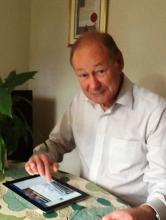
Jeff was born in Hanley, West Midlands, in a family of ‘staunch’ Conservative supporters, where he developed an early partisan interest. He studied economics at the University of Exeter from 1967-70, where he was a committee member of the University’s Conservative and Unionist Association. He later returned to Exeter as a Lecturer in 1974, where he stood and served as a Conservative candidate and councillor in Exeter from 1979 and intermittently until 2011. At the time of the interview, Jeff was a City Alderman in recognition of his services to politics.
Below, you can listen to a snippet of his interview where he discusses his time at Exeter University when he was a member of the Conservative and Unionist Association organised for Enoch Powell to give a speech in October 1968:
Anita Long
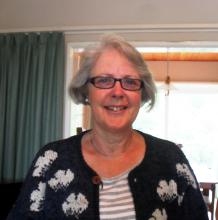
Anita was born in Exeter, where her father was a Labour councillor and later mayor. She remembers canvassing with her father from a young age and at 14 she joined the Young Socialists. At 22 she married Chester (also an interviewee) who was a Labour councillor. At the time of the interview she remained a committed socialist and was continuing her party activism. She said she felt proud of being part of a group which she believed had improved the city of Exeter.
In this clip, Anita discusses her early memories of political campaigning:
David Verney
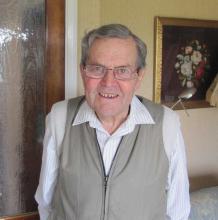
David was born in North Devon, where his father was Chairman of the local Liberal Association and one of his earliest political memories was campaigning in the 1945 election. He became more involved with the Liberal party in the 1950s after the arrival of Jeremy Thorpe, who he described as “a breath of fresh air”. He became involved in canvassing and campaigning for Thorpe, who eventually won the North Devon seat in 1959. Despite following his father by becoming Chairman of the local Liberal Association, David stood for Devon County Council as an independent, even after its reorganisation along political lines in 1973. He won the election ahead of a fellow Liberal who also stood as an independent. He stood down from the Council in 1981 due to his increased responsibilities in the National Farmers’ Union.
In this clip from our interview with David, he discusses the impact Jeremy Thorpe had on the Liberal party in North Devon:
Andrew Pratt

Andrew (Andy) was born in Devon and described his schooling and home life as fairly conservative growing up. Andy became politically active at a young age and his first deliberate attendance of a political meeting was that of the young socialist wing of the Labour movement in 1979. He studied at university, and in the period after study describes himself as a political activist, living as a nomadic traveller and doing various jobs, including working on a city farm in London. In 1992 Andy’s career changed course when began working for Oxfam as a UK campaigner. Andy didn’t join the Green party until 1991, but has been at the centre of the Green party’s development in the local community. He described two of his biggest achievements as keeping the Plymouth Green party alive and kick-starting the Greens in Totnes.
Below, listen to Andy talk about the influences that shaped his political identity:
Chester Long
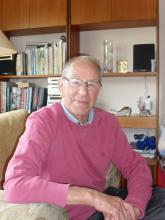
Vivian Spencer Roy Long, known as Chester, was born in Exeter. Chester’s parents were both strong Labour supporters. He became involved in Labour Party and union politics, first elected as a union regional representative and city councillor in 1963. A year later he met his wife, Anita, whilst she was canvassing for her father (another Labour councillor). Their two children are both Labour activists, one herself became a councillor (Emma Morse).
Chester sat on the Council until he lost his seat in 1968. At this time he was elected as Regional Secretary in the union, and in 1972 returned to Exeter City Council as Deputy Leader of the Labour group. In 1983 he became leader of the Council, a position he held until 1999, for ten of those years running a ‘hung’ Council. He counts amongst his greatest achievements helping build Labour support in Exeter and making improvements to city parks, council houses and setting up a park and ride scheme.
Chester’s first political memory was during the 1945 election, when he acted as a ‘runner’ for the Labour party, which you can listen to below:
Joan Morrish
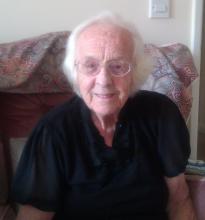
Joan Morrish grew up in South Devon, but moved to Exeter after marrying her husband David Morrish in 1959. Joan came from a long line of Methodists and was herself a Methodist preacher for 50 years. Methodism played an important role in her family’s political identity, and she believes that Methodism and Liberalism were “clearly linked”. Joan’s first taste of politics was during the 1945 General Election, when aged only 19 years old she canvassed for Isaac Foot, the Plymouth-born Liberal politician and Methodist lay preacher (and father of Michael Foot, former Leader of the Labour Party).
Joan’s formative years in politics developed into her vocation as a councillor for the Liberal Party. She served on Devon County Council for 10 years and on Exeter City Council for 20 years, eventually stepping down in May 2012.
Below, you can listen to Joan discuss her family’s Methodism and politics:
Emma Morse

Emma Morse was born in Exeter in 1978 to Chester and Anita Long. Emma has early childhood memories of spending much time involved in the canvassing for the Exeter Labour party, which informed her early understanding of politics and activism. Emma cites this early experience of political activity as the prequel to her ‘rebellion’ at university, when she was not engaged in the political process. After university Emma worked for a time in Cambridge and London, before moving back to Devon.
When she returned to Exeter, Emma and her husband paid a greater attention to the actions of the Labour Party. Emma was approached to stand in the city council elections of 2013, after her predecessor stepped down. She continued to stand for, and win, the Pinhoe and Mincinglake seat, fulfilling her wish of representing the local community where she grew up. Emma stepped down as a councillor in 2024.
In her oral history interview, she discusses the impact of the Miners’ strike, which you can listen to below:
David Worden

David Worden was born in Liskeard, Cornwall. His father was a Methodist preacher and an enthusiastic local Liberal, David remembers campaigning with his father from a very young age. David was again involved in Liberal politics whilst at Westminster College, Oxford, arranging speakers for Young Liberals meetings by the likes of David Steel, campaigning in Abingdon, and even reporting on the Troubles from Belfast for the Methodist Recorder.
David became Chairman of the Devon and Cornwall Young Liberals, and in 1972 ran for Barnstaple Borough Council, motivated by a desire to make a difference to a deprived area of the town. He helped establish a strong team of Liberals who campaigned for the election of Jeremy Thorpe in the 1950s. Elected to North Devon District Council in 1974, he held his seat even after moving out of the town, before illness forced him to stand down from the Council. After his retirement as a teacher he was once again elected to North Devon District Council as a Liberal Democrat. Throughout this period he was still involved in the Liberal and Liberal Democrat parties, despite once being approached to stand as a Conservative parliamentary candidate.
Below, you can listen to David talk about the organisation of the Liberal party in North Devon:
This oral history archive is held at the Devon Heritage Centre, Exeter and remains a valuable resource for those interested in Devon’s rich political past. Get in contact with the centre if you would like to hear any more of the interviews conducted as part of this project.
