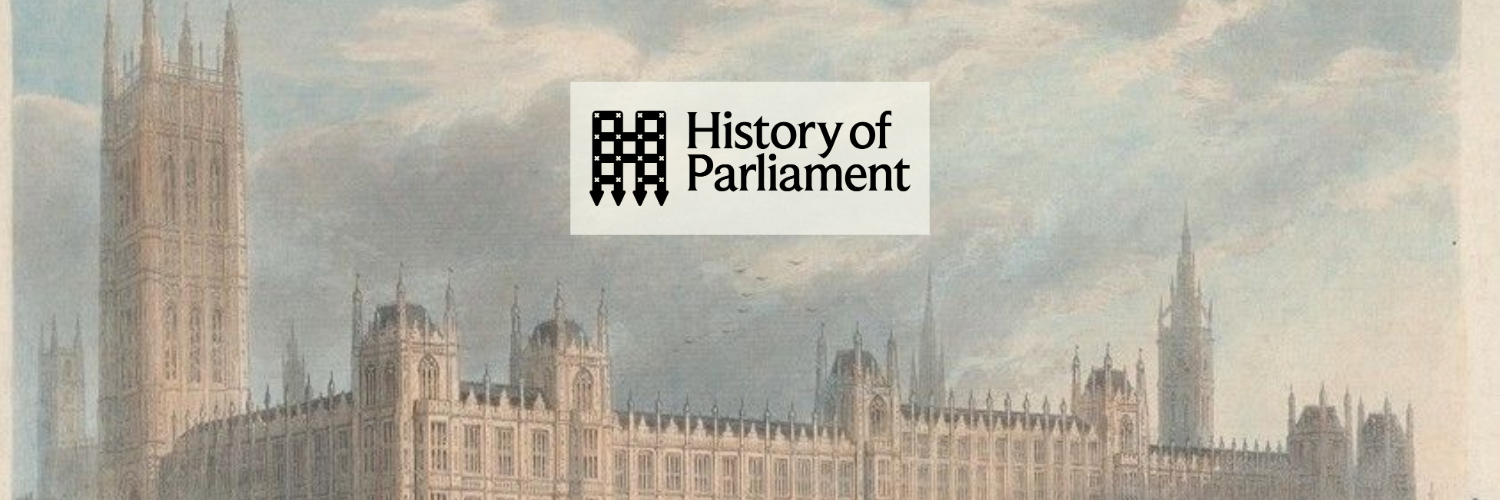
At the IHR Parliaments, Politics and People seminar on Tuesday 17 February, Dr Cara Gathern of UK Parliament Heritage Collections, will be discussing representations of women and sovereign power at the New Palace of Westminster, 1841-1870.
The seminar takes place on 17 February 2026, between 5:30 and 6:30 p.m. It is fully ‘hybrid’, which means you can attend either in-person in London at the IHR, or online via Zoom. Details of how to join the discussion are available here.
The mid-Victorian artistic decoration of the Palace of Westminster, the home of UK Parliament, has long been understood as a fundamentally masculinised scheme. This ambitious art project was overseen by the Royal Commission on the Fine Arts (1841-1863), and was part of the rebuilding of the Palace of Westminster after the 1834 fire.

The new interior in the Palace of Westminster offered an opportunity to promote British art and cultivate national political identity through carefully constructed imagery. My paper for the Parliaments, Politics and People seminar on 17 February demonstrates that female visual representation was a central concern of the commission.

The 1841-1863 Fine Arts Commission made a conscious effort to include and increase imagery of women throughout the Palace of Westminster’s principal chambers. In doing so, the commissioners conceptualised women as integral to the development of the British political constitution. Their choice of artworks also reflected Queen Victoria’s position as monarch, foregrounding women as religious and military leaders, and as channels and sometimes exercisers of political power.
CG
Dr Cara Gathern is a heritage professional with a PhD from the University of Brighton. She works as a Researcher and Curatorial Assistant for UK Parliament Heritage Collections, where she has an academic interest in the 19th-century scheme under the Commission of Fine Arts, and the 20th-century mosaics. Her Oxford DNB entry on Master Mosaicist Gertrude Martin was published in December 2024 and her journal article on early female contributions to Parliamentary art, co-authored with Caroline Babington, is due to be published in Women’s History Review in July 2026.
The seminar takes place on 17 February 2026, between 5:30 and 6:30 p.m. It is fully ‘hybrid’, which means you can attend either in-person in London at the IHR, or online via Zoom. Details of how to join the discussion are available here.